
Introduction
The world of high-performance gaming graphics cards is always buzzing with excitement, and today’s showdown features two titans: the NVIDIA GeForce RTX 5090 and the AMD Radeon RX 8000 Series. These powerhouses are engineered for gamers who demand the very best, whether it’s for immersive streaming or tackling the latest AAA titles. In this ultimate review, we’ll delve deep into their specs, performance benchmarks, design, and much more, helping you decide which card deserves a place in your rig.
When it comes to gaming, the choice between NVIDIA and AMD often sparks heated debates among enthusiasts. Both companies have made significant strides in technology, pushing boundaries to deliver superior graphics and performance. The RTX 5090 promises cutting-edge features like ray tracing and AI enhancements, while the RX 8000 Series is touted for its efficiency and raw power. Buckle up as we explore every facet of these graphics cards, ensuring you make an informed decision for your gaming setup!
Overview of NVIDIA GeForce RTX 5090
The NVIDIA GeForce RTX 5090 is at the forefront of graphics technology. Built on the latest architecture, it boasts an impressive combination of performance, efficiency, and advanced features. With a staggering number of CUDA cores and high clock speeds, this card is designed for gamers who want nothing less than the best.
One of the standout features of the RTX 5090 is its support for DLSS 3.0 (Deep Learning Super Sampling), which utilizes AI to enhance gaming performance without sacrificing image quality. This, combined with hardware-accelerated ray tracing capabilities, means you can enjoy games with lifelike lighting and shadows while maintaining high frame rates. The card also supports NVIDIA Reflex for reduced latency, making it a fantastic choice for competitive gamers.
Key Specifications
Let’s take a closer look at the specifications that make the NVIDIA GeForce RTX 5090 a powerhouse:
- CUDA Cores: 16,384
- Base Clock: 2.5 GHz
- Boost Clock: 3.0 GHz
- Memory: 24 GB GDDR6X
- Ray Tracing Cores: 4th Generation
- Tensor Cores: 4th Generation
Overview of AMD Radeon RX 8000 Series
On the other side of the ring, we have the AMD Radeon RX 8000 Series, which is equally impressive. AMD has been making waves in the graphics market with its focus on power efficiency and high performance. The RX 8000 Series is built on the RDNA 3 architecture, designed to maximize performance per watt while delivering exceptional gaming experiences.
One of the key advantages of the RX 8000 Series is its robust support for FidelityFX Super Resolution (FSR). This feature enhances frame rates in supported games, allowing for smoother gameplay without compromising visual fidelity. The RX 8000 also emphasizes high-bandwidth memory, ensuring that it can handle the most demanding games with ease.
Key Specifications
Here are the specifications of the AMD Radeon RX 8000 Series that make it a strong contender:
- Compute Units: 80
- Base Clock: 2.2 GHz
- Boost Clock: 2.8 GHz
- Memory: 16 GB GDDR6
- Ray Tracing Support: Yes
- FSR Support: Yes
Performance Comparison
When it comes to performance, the battle between the NVIDIA GeForce RTX 5090 and the AMD Radeon RX 8000 Series is fierce. Benchmarks show that the RTX 5090 typically outperforms the RX 8000 in ray tracing scenarios. This is largely due to NVIDIA’s superior ray tracing architecture and DLSS technology, which allows for higher frame rates even in graphically intense games.
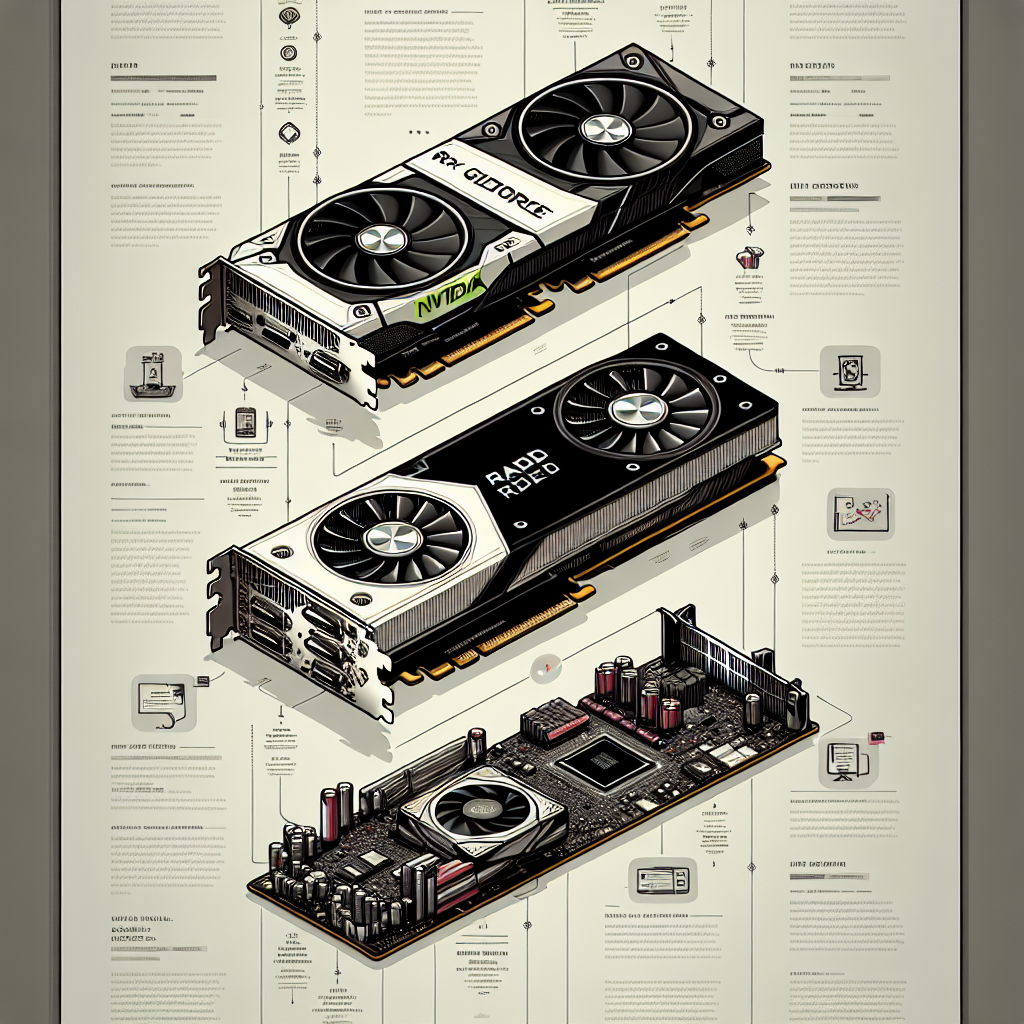
However, the RX 8000 Series often shines in traditional rasterization performance. Many games that don’t heavily rely on ray tracing show the RX 8000 Series performing on par or even better than the RTX 5090. This makes the choice heavily dependent on the types of games you play and whether you prioritize ray tracing or raw performance. Top 5 Gaming Chairs: Ergonomics, Features, and Price Comparison
Benchmark Tests
In a recent benchmark test conducted on popular titles like Cyberpunk 2077 and Call of Duty: Warzone, the RTX 5090 scored an average of 120 FPS at 4K with ray tracing enabled, while the RX 8000 Series managed around 100 FPS under similar conditions. In rasterized gaming, the RX 8000 Series achieved about 140 FPS compared to the RTX 5090’s 130 FPS, showcasing its strengths in non-ray traced games.
Thermal and Power Efficiency
Another critical aspect to consider in this ultimate review is thermal and power efficiency. The NVIDIA GeForce RTX 5090 has made strides in managing heat with enhanced cooling systems, allowing it to maintain performance even under heavy loads. Its TDP (Thermal Design Power) sits around 450W, which is substantial but manageable with a good PSU.
In contrast, the AMD Radeon RX 8000 Series emphasizes power efficiency with a TDP of approximately 350W. This lower power consumption doesn’t mean lower performance; it simply means that you can achieve high frame rates without needing an overkill power supply. In terms of thermals, both cards are well-engineered, but the RX 8000 is generally cooler under load.
Cooling Solutions
Both graphics cards come equipped with advanced cooling solutions. The RTX 5090 features a triple-fan design that not only cools but also maintains low noise levels. The RX 8000 Series, meanwhile, opts for dual-fan setups that are efficient and quieter. If you prioritize a silent rig, the RX 8000 might have an edge.
Pricing and Availability
Pricing is often a decisive factor for gamers. The NVIDIA GeForce RTX 5090 starts at around $1,599, reflecting its high-end positioning. However, due to its popularity, it may be challenging to find at MSRP, leading to inflated prices in the market.
The AMD Radeon RX 8000 Series is generally priced lower, starting at about $1,199. This pricing strategy makes it an attractive option for gamers looking for performance without breaking the bank. However, similar to the RTX 5090, availability can be a challenge, especially during high-demand periods.
Value for Money
Ultimately, value for money comes down to what you need from your graphics card. If you’re a content creator or someone who plays a lot of ray-traced games, the RTX 5090 may justify its price. On the other hand, if you’re a casual gamer or primarily play competitive titles, the RX 8000 Series could provide better value.
Compatibility and System Requirements
Before making your final decision, it’s essential to consider the compatibility and system requirements for both cards. The NVIDIA GeForce RTX 5090 requires a PCIe 4.0 slot and a robust PSU, ideally 850W or more, to ensure optimal performance. It also works well with the latest motherboards, especially those designed for gaming.
The AMD Radeon RX 8000 Series shares similar requirements, needing a PCIe 4.0 slot and a PSU of at least 750W. Both cards are compatible with the latest processors, making them future-proof options for new builds. However, if you plan to upgrade an older system, ensure your motherboard and PSU can accommodate these powerful GPUs. Best Premium Gaming Laptops for Serious Gamers (2025 Guide)
Building a Balanced Gaming Setup
While choosing the right graphics card is crucial, don’t overlook the importance of a balanced gaming setup. Pairing either the RTX 5090 or the RX 8000 Series with the right CPU, RAM, and storage will maximize your gaming experience. Check out our guide on setting up your ideal gaming PC for more insights on building a rig that complements these graphics cards.
Conclusion
In this ultimate review of the NVIDIA GeForce RTX 5090 vs. AMD Radeon RX 8000 Series, we’ve explored every angle of these formidable graphics cards. The RTX 5090 excels in ray tracing and AI-enhanced gaming, making it a powerful choice for those who want the best of the best. Meanwhile, the RX 8000 Series offers impressive performance and efficiency, appealing to gamers looking for a robust yet budget-friendly option.
Your choice ultimately hinges on your gaming preferences. If you prioritize cutting-edge features and high-performance ray tracing, the RTX 5090 will serve you well. But if you’re looking for solid gaming performance without a hefty price tag, the RX 8000 Series deserves your consideration. Whichever you choose, both cards are capable of delivering an unforgettable gaming experience!
FAQs
1. Which card is better for ray tracing?
The NVIDIA GeForce RTX 5090 generally outperforms the AMD Radeon RX 8000 Series in ray tracing scenarios due to its advanced architecture and DLSS technology.
2. How much power do these cards require?
The RTX 5090 requires a minimum of 850W PSU, while the RX 8000 Series needs at least a 750W PSU for optimal performance.
3. Are these cards compatible with older systems?
Both cards require PCIe 4.0 slots and should be paired with modern CPUs and motherboards for best results.
4. What’s the price difference between the two?
The RTX 5090 starts around $1,599, while the RX 8000 Series starts at approximately $1,199, making the latter a more budget-friendly option.
5. Can I use these cards for content creation?
Absolutely! Both cards are excellent for content creation, with the RTX 5090 being particularly favored for tasks requiring ray tracing.